
Puzzled by current furor over Venezuela 2024 elections? Look to Bolivia 2019.
In each of these countries in those years, a leftist won an election. and international media reports followed that election fraud had occurred. In Bolivia 2019, in a “havoc” resulting from media reports, the military ousted president Evo Morales.
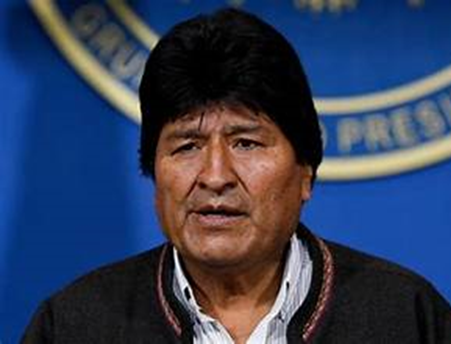
Fast forward to Venezuela 2024: when the New York Times reported a “tainted” election, Venezuelan opposition leaders became global stars.

And, many nations including the US demanded resignation of Venezuelan president Nicolas Maduro.
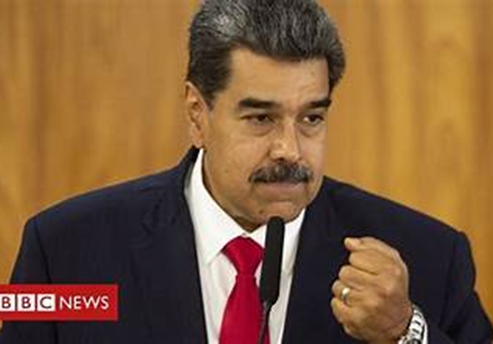
In both of these cases of fraud claims – Bolivia 2019 and Venezuela 2024 – the record shows US action helped produce the fraud claims. In both countries, these claims were,
‘An early vote count does not match a final count.’
A key difference? The Venezuelan opposition produced the data now widely regarded as that country’s final vote count.
Bolivia 2019
In Bolivia, an election-security contractor[1] spotted what seemed to be a hack into an early-count system, reporting,
“Presence of an unmonitored server (BO1).”[2]
As a result, the government stopped the count on this compromised software. This computer system had been supplied to the government by NEOTEC, owned by Marcel Guzman de Rojas, a member of the anti-Morales Venezuelan elite.[3] Guzmán de Rojas said the shutdown was unwarranted. He seemingly suggested the “undeclared server” was harmless – innocuous.[4]
That is possible, but the record shows that “BO1” typically stands for Black Ops 1, the name of an American-made electronic game.
It’s unclear why Guzman de Rojas had on his system any “undeclared” server – much less an American-manufactured Wargame server – why he had anything to cause an emergency alert that stopped the system. Regardless, this mystery electronic device stopped a Bolivian vote count – at a time when the count did not favor Morales.
When a final count did favor Morales, monitors from OAS (Organization of American States) suggested, vaguely, that fraud had occurred.[5]
In ensuing havoc, vote records were destroyed in arson violence done by agents of a powerful right-wing oligarch, Luis Fernando Camacho.[6] Days before, top US officials – both military and Embassy – had met with Camacho. This group arranged that covert payments be made to top police officers – who would receive $500,000 each – and to several Bolivian military chiefs, would be paid $1 million each.[7] It is unsurprising, then, that during post-election chaos, police stood down,[8] and Bolivian soldiers ousted Morales.
Remarkably, the group arranging these clandestine payments had met for this purpose in neighboring Argentina [for details, see coming essay “Argentina 2019 to 2024.”]
It is evident that geo-political economic power was the context here.
Frequently in such covert foreign exploits, a particular US company or companies has been pre-selected to develop a prized resource had by a foreign nation.[9] In this case, the resource obviously was the crucial to electric cars and the likely pre-selected lithium developers were Elon Musk, owner of Tesla Energy, and a copycat, Teague Egan, owner of EnergyX.
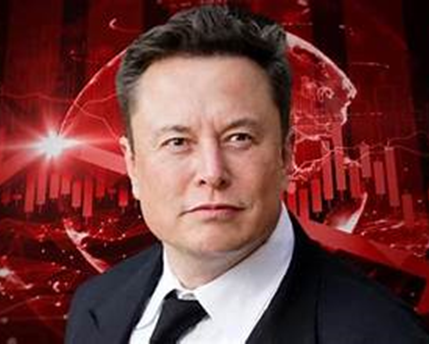

Egan grew up wealthy in southern Florida, son of the founder of Alamo Rent a Car. He rana small investment fund. In 2013, after Tesla stock price dropped hard because of auto fires, Egan paid a half-million dollars for a blockof Tesla shares, essentially discount-priced.[10]
A few years later in Bolivia, Evo Morales approved a bid, for lithium investment, from a German firm.[11] There were no bids from US firms (including Musk’s). This reportedly was because “the relationship between Bolivia and the U.S. remains fractured after years of anti-U.S. rhetoric on Morales’ part.”[12]
Barely three months later, in August 2018 Egan traveled to Bolivia’s Salar de Uyuni lithium belt and declared, suddenly and brashly in the context, that he would develop Bolivian lithium.[13] This was while Morales was campaigning on a platform implicitly including non-US lithium development. Fourteen months later, in October 2019, Morales was ousted and two weeks after that, the Bolivian Cabinet (under interim rightist president Jeanine Anez) canceled Germany’s ACI lithium contract.
The record strongly suggests that during coming months, despite a new socialist regime succeeding Anez, US geo-political-economic interests planned a retry for Bolivian lithium, again with Teague Egan.
In August 2021, Egan traveled to Salar de Uyuni’s government lithium-development facility, to meet with unidentified “local leaders”[14] in a bid to have the plant install EnergyX technology. When Egan arrived, however, the complex was closed (likely on the order of socialist president Luis Arce) and guarded by soldiers.
Then, in early 2024 in Salar de Uyuni, Egan’s EnergyX successfully ran a pilot project for five months but failed, or possibly avoided, submitting a timely bid for continuing such a project.[15]
Teague Egan is now big. EnergyX boasts a General Motors official on its governing board and Chilean mining rights on more than 100,000 acres.[16] As such, ostensibly Egan’s EnergyX competes with Elon Musk’s Tesla Energy. But effectively, Egan’s company serves to lessen scrutiny – antitrust scrutiny – on Musk’s vast empire (here, recall that in both Bolivia and Venezuela Musk’s electronic empire is charged with helping undermine a leftist presidential candidate; recall too that in Bolivia, an apparent vote-computer hack appeared, by a mysterious “undeclared server.”
Re Bolivia, Musk effectively admits helping a coup,[17] and admission is the strongest proof. In the Venezuela conflict,[18] Musk coyly denies participating, but Venezuela has the bauxite mineral valuable for Musk’s enterprise in giant energy-storage batteries, which Tesla Energy sells. And jokingly, Musk has sketched a SpaceX-satellite laser attack on Maduro, saying,
“I’ll singe his mustache from space.”[19]
SpaceX satellites serve US intelligence agencies; in government circles Musk has firmly ingratiated himself. Arguably the government is lax around Musk, viewing him as “to big to regulate.”
“Too big to regulate” is the same as “so big we’ll ignore misdeeds.”
This unsettling qualification doubtless has various results, among them an easeing of the way for any cabal including Musk in operating to eradicate Latin American socialism.
[Evidence of such an operation is to be given in coming essay on this Site “Argentina 2019 to 2024”]
[1] The EHC company.
[2] Center for Economic and Policy Research, “Observing the Observers,” March 10, 2020.
[3] Through Guzman’s NEOTEC company. La Pagina newspaper, Bolivia, October 13, 2019
[4] El Deber, Bolivia, October 9, 2019; ShunCulture Web site, September 15, 2024.
[5] Center for Economic and Policy Research. As it happens, the US pays nearly 60 percent of the OAS budget.
[6] Al Jazeera, November 16, 2019; Counterpunch, November 22, 2019. Camacho, with links to paramilitary groups, has been described as Bolivia’s Bolsonaro.
[7] Counterpunch, November 22, 2019 Sixteen audio recordings of the plotters’ pre-election conversations were leaked and showed up on the Internet. Several of the voices mentioned contacts with the U.S. Embassy and with U.S. Senators Ted Cruz, Robert Menendez, and Marco Rubio. Sprague reports that four of the ex-military plotters on the calls had attended the School of the Americas. Analyst Jeb Sprague reports that, “At least six of the key coup plotters are alumni of the infamous School of the Americas.” Sprague adds that the police commanders associated with the police mutinies received training at the Washington-based Latin American police exchange program known as APALA.
[8] Wikipedia
[9] E.g., Halliburton, or Exxon, or both jointly often have figured in plans concerning foreign oil resources.
[10] OilPrice.com, March 24, 2023
[11] In April 2018, a $1.3 billion investment from Germany’s ACI Systems GmbH.
[12] Americas Quarterly, May 22, 2018
[13] Shale Magazine, November 4, 2022.
[14] The “leaders” likely were anti-socialist activists from the powerful Civic Committee of nearby Potosi.
[15] Ibid. to 13. Egan has not been asked to explain this. It fits with a theory that US lithium interests demand to see, somehow, an end to socialism in Bolivia before moving in.
[16] MSN.com
[17] Ibid.
[18] Maduro has blamed Musk, vaguely, for funding and for providing weaponized, satellite-based electronics capability to disrupt the 2024 election. Latin Times, July 29, 2024
[19] RT.com News, October 15, 2024