
The Republic of South Korea in 1980 was a “banana republic” in the sense that self-government did not really obtain, but Koreans understood this ideal, wanted it, and moved to get it. Dismayingly, they found the US opposed.
A passion against undue authority gripped South Koreans in 1980 in the wake of back-to-back military coups d’etat, the latest installing ruling general? Chun Doo-whan. In response to large public demonstrations against him, Chun declared martial law on May 17, 1980, but demonstrations grew – to 100,000 in Gwangju alone (fully one-seventh of the city’s population.
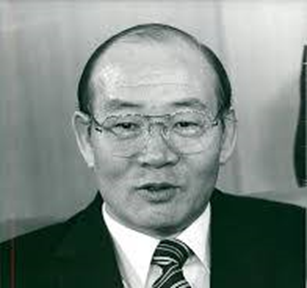
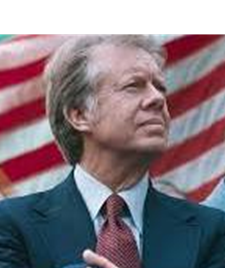
Chun wanted to deploy his army to break up the massed demonstrators, and – in this post-war time – South Korea was allowed move its troops only with US agreement (under the US-Korean Joint Command). US president Jimmy Carter agreed to allow Chun to send the South Korean army against demonstrators. In May 1980, Chun sent in paratroops to the city of Gwangju. These special-forces troops attacked crowds, firing on and bayoneting demonstrators – killing hundreds of citizens and injuring possibly 2,000 more.[1]
But remaining thousands of demonstrators rallied, gathered weapons, and forced the paratroops out of Gwangju. This Gwangju uprising began a period of unfettered self-rule – government by citizens for citizens – in that large Asian metropolis.
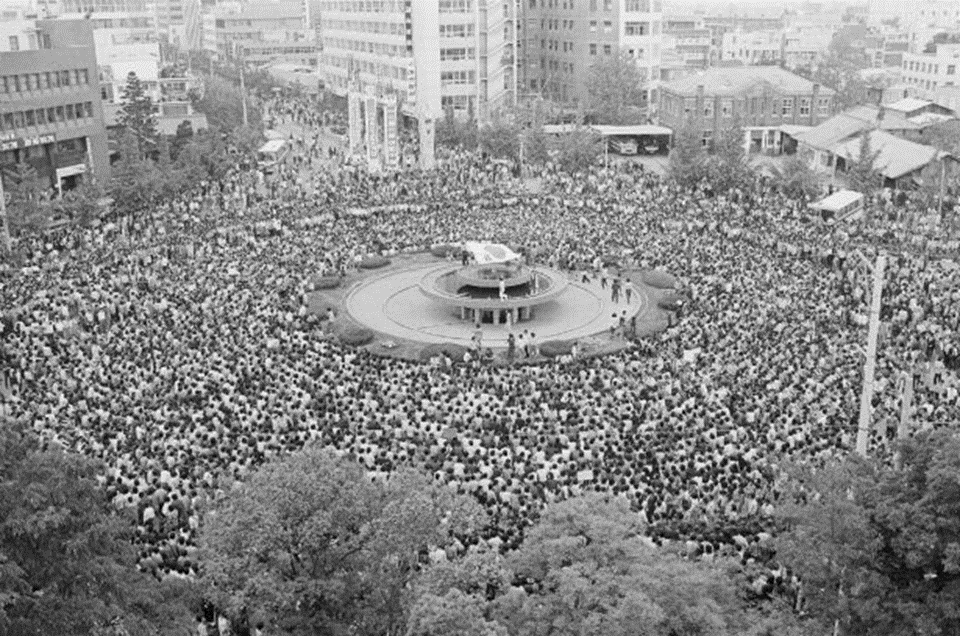
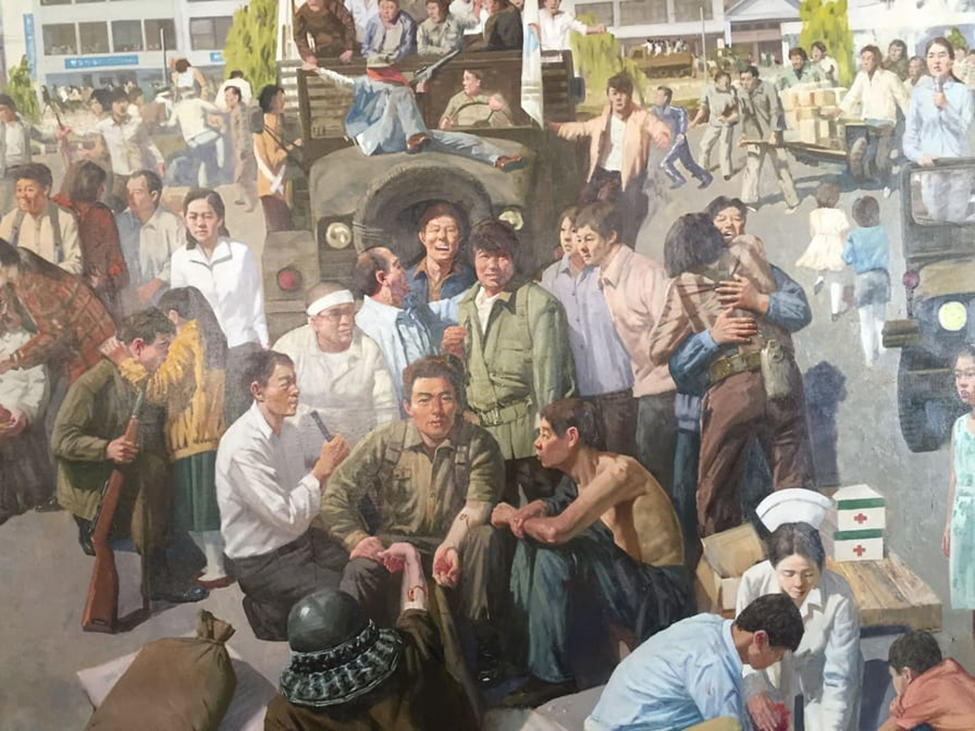
It is difficult to say how threatening this was to American powers (when, by right of the Declaration of Independence, Gwangju self-government could have qualified as no threat to America). But for decades no news of Gwangu reached typical American citizens as major media ignored this outbreak of pure democracy. This came despite journalist Tim Shorrock visiting Gwangju just days after the uprising and filing stories with several small US publications.
It was not until 2015, when US media reported that Gwangju was the site of the United Nations Human-Rights-Cities Forum, that word could get out to Americans about the Gwangju 1980 people’s uprising.
In The Nation on June 5, 2015, Shorrock described the Gwangju uprising.[2]
“Virtually the entire city joined in, creating a self-governing community that many Koreans now compare to the Paris Commune of 1871. Women shared food and water with the fighters. Taxi and bus drivers shuttled rebels around the town and, on several occasions, used their vehicles as weapons against marauding soldiers. Nurses and doctors tended to the wounded. Citizens, young and old, flocked to local hospitals to donate blood.”
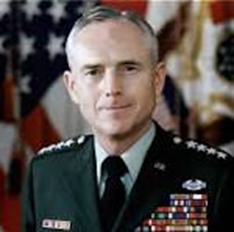
In 1776, an uprising established American self-rule. Koreans had passionately admired that. But as Shorrock wrote of May 1980 in South Korea (when with the approval of US commander Gen. John Wickham, US-Korea Joint Command, troops were sent against Korean pro-democrats),
“That decision, made at the highest levels of the US government, forever stained the relationship between the United States and the South. For the people of Gwangju, many of whom believed that the US military would side with the forces of democracy, it was a deep betrayal that they’ve never forgotten.”[3]
Days after Shorrock’s story in The Nation, America’s news consumers became mesmerized by stories about Donald Trump’s announcing for president, and evidently this big story served to limit awareness of what The Nation had reported on Korea.[4]
[1] To conceal the scale of protests, Chun cut off all communication from Gwangju and used propaganda to depict the demonstrations as the result of communist instigators. Incidentally, democratic Peru recently saw anti-authoritarian demonstrators killed by police. For a report, see essay on this Site, “Democracy Hypocrisy as Lawfare.”
[2] The next day, major media again ignored the matter – busy with reporting that Donald Trump had declared he was running for president.
[3] Click here for a chronology of the Gwangju uprising; a link to the June 5, 2015 story, in The Nation, on that rebellion.
[4] The story was big because, for example, the New York Post had recently editorialized, “Stop Pretending –– Donald Trump Is Not Running For President,” opining,
“If Trump did get into the race and practiced his usual habit of being a giant publicity vortex, he would merely deprive more serious candidates of opportunities to get their messages out before Trump’s inevitable exit from the race.”
That is, in the Post’s opinion, which was popular, America’s democratic process would in and of itself “reject” a crass billionaire authoritarian, like a tree rejecting a graft.