
The US is practically certain to remain involved in Ukraine affairs as long as it can or permanently. American licenses to extract natural gas are only one reason.
In 2016, Ukraine nationalized PrivatBank after its officers embezzled $5.5 billion. Refunding this money to depositors caused a “severe financial crisis,” at which opportunity USAID stepped in. USAID (US Agency for International Development) promoted in Ukraine something called “Digital Transformation,” including Internet bankingUSAID helped found the online Monobank – run, curiously, by former PrivatBank officials, including Oleksandr Dubilet, who later was accused of embezzling part of the lost $5.5 billion.[1]
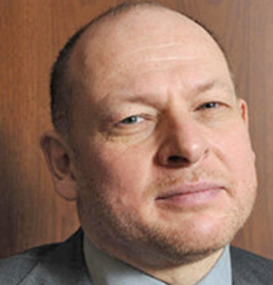
And in 2016, Dubilet and fellow Monobank execs calmly pushed USAID to support a policy of zero-regulation for Internet (“fintech”) banking.
To USAID, Dubilet colleague Oleg Gorokhovsky said,
“It would be cool if fintech were made free from regulations and would not (need) local licenses for simple payment transactions….It would be logical if the licenses issued to fintechs by (foreign) regulators were accepted by Ukraine.”[2]
Internet Money — Unwatchable
USAID did achieve a loosening of regulations on Ukraine fintech. It supported a software called “Diia,”[3] made by Pentagon contractor EPAM[4] toward “financial transformation” of Ukraine.[5] Dubilet’s Monobank registers many of its new clients through Diia.[6]
Three years later, Volodymyr Zelensky loosened tax laws and other regulations for Monobank – and for other oligarch members of an Internet community he called “Diia City.” [7]
Two years after that, Zelensky’s martial-law act cut banking regulation to nearly nothing, as follows:
- On-site inspections of banks, under international Anti-Money-Laundering regulations, are suspended;
- Unpaid, defaulted loans no longer draw default penalties[8];
- One can deposit money anonymously to an Internet bank, if either
- a) The deposit is more than $11,000 or
- b) part of the money is earmarked “donation to the Armed Forces of Ukraine.”
As is well-known, the less bank is regulated, the more likely it is to allow the laundering of money (a problem Ukraine already had),[9] and a 2022 Canadian report says Diia City shows,
“increasing…illegal financial transactions on the Internet.”[10]
As such in this money system, which is still supported by the US, arguably criminals both individual and organized enjoy near-carte blanche in washing money. This despite loud public policy toward curbing money laundering.
Prostitution
Just so, too, with another Zelensky plan – to establish prostitution as a core industry for a new Ukraine. Zelensky has said there should be an opportunity to “sell sex for money” within just one chosen Ukrainian city (not yet picked), opining,
“I think we have the opportunity…to set up (a) Las Vegas. The society would not mind, as taxes would be paid. Why not give an opportunity to a… city or territory and open it all there, it’s about giving an opportunity, taking it all and moving it there. Any ‘abandoned city’ can be developed in such a way.”[11]
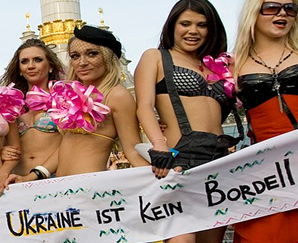
“Abandoned cities” in Ukraine are those housing Soviet factories that under Ukrainian government were mismanaged and closed (these include the cities of Stepnogorsk, Dolinskoy, and Tsukrovarov).[12] Until early 2023, state migration officials partnered with a Kiev gang running prostitutes.[13] At the same time, as Ukraine already has a bad reputation as a sex-tourism destination (second only to Bangkok), public opinion against legalized prostitution has spawned activism.
Gambling
After a large explosion killed 10 and wounded 10 other people at a gambling hall in Dnipropetrovsk in eastern-Ukraine, the Associated Press reported a “possibility it was a bomb.”[14] This was likely given that for organized crime during the 2000s, Dnipropetrovsk served as a chief “logistical center.” Reflecting this, although Ukraine officially opined the cause was “a slot-machine short-circuit,” officials just days later banned all gambling in the country – casino and Internet.
Ukraine’s Parliament has prohibited gambling until all casinos and slot machines are moved to a government-selected legal gambling zone,[15] saying gambling has reached the scale of an epidemic.
Parliament recommended southern Crimea as a government-controlled zone for gambling. This was remarkable because southern Crimea long has been well-known gang turf.[16] The village council of the Crimean village of Partenit Mykola Konev, where resort construction was booming, was charged with receiving a $5.37 million bribe for promising to allocate 17 hectares of village land worth approximately $35 million to an unnamed Kiev businessman.[17]
In this context, Zelensky in July 2020 re-legalized gambling throughout Ukraine. Applications for gambling licenses are to be automated. No face-to-face vetting would seem to make it easier for dishonest applicants, but no, Zelensky says.
“[Automating the licensing process] will make corruption schemes impossible,” said the Ministry of Digital Transformation in a statement.[18]
Access to this new gambling market is costly. Experts at Law & Trust International, LLC, said,
“The authorized capital should be approximately equal to 1 million euros at current UAH rate. The company must have the bank guarantee amounting to slightly over 1 million euros. The license fee will depend on the type of license and will amount to 8 million euros for the land-based casino in Kyiv and 920 thousand euros for online gambling.”[19]
Having this kind of money are oil barons, hedge funds, and the wealthiest of criminals. Already, bribery of regulators is called “endemic” at Ukraine’s Gambling and Lottery Regulatory Commission.[20] Arguably, Ukraine made only a token effort, at best, at regulating gambling.
Drugs: Cannabis and Hallucinogens “For Veterans”
In 2019, Zelensky’s presidential campaign included legalizing marijuana. Zelensky said,
“I think that this is ‘normal’ [to legalize marijuana].”[21]
With the war, cannabis therapy for war-caused PTSD is championed by Zelensky’s wife, Olena Zelenska. To advance this idea, Zelenska hired a survey, by Kantar, which reported war-caused PTSD could affect a majority – 57 percent – of Ukrainians (this is a marked contrast to the World Health Organization’s December 2022 results that said about a quarter of Ukraine’s population may suffer from conflict-related disorder).
Kantar collaborates with USAID[22] and EPAM,[23] and – just as does EPAM – Kantar sells “digital transformation” of governments.[24] And, first lady Zelenska has thanked USAID for “comprehensive assistance.” As such, it is fair to say the Kantar finding of 57 percent risking PTSD is US-sponsored, as is Ukraine’s entire push for marijuana therapy. Now, under Zelensky’s presidency, a law is near passage that will license farms to cultivate medical marijuana.[25]
Already, Ukrainian mobster Michael Malenkov controls marijuana fields – in the US – sending millions in cash back to Ukraine. Malenkov has controlled cannabis clinics, too.[26] In Oklahoma, international organized crime has obtained nearly 1,000 fraudulent licenses to grow marijuana.[27] In Oregon, as well, organized crime grows tons of marijuana, in rural communities.[28] All this to say that Zelensky at best has not done due diligence or at worst may not care or may welcome organized crime. Recall Zelensky’s remark on prostitution, “There will be taxes.”
In Ukraine, because non-medical marijuana use remains illegal, organized crime is the only supplier for non-medical users – not only for cannabis but also for harder drugs. Gangs have catered pain-killing drugs in Ukraine since end of Soviet rule, when – amid national chaos and poverty – masses of Ukrainians turned to injectable opiates supplied by organized crime. They paid for and got the drugs publicly, hand-to-hand, on the streets.
These days, drug dealers behind closed doors can get paid via electronic cash-transfer while messaging a location to a customer for a pickup of “stash.” Researchers found,
“Participants described calling a trusted number to check whether the drug is available; transferring money through cash transfer machines (widely available in supermarkets and elsewhere), and receiving instructions about where to find the ‘stash.’”[29]
As we have seen, money matters are minimally regulated in Ukraine’s “digitally transformed” system (Diia City plus Internet banking plus martial law).[30] Ukraine has also banned the import of raw ingredients for cannabis meds until 2028, which critics say will not help to address the current emergency.
“The law is not about helping people today,” said Serhiy Vlasenko, of the opposition Motherland party. “The law is about growing marijuana in Ukraine and making that big business, private business.”[31]
Super-Lab Ukraine
Google partnered in June 2023 [32] with Diia City designer and Pentagon contractor EPAM company[33] to “deploy,” worldwide, a software called Google Cloud AI.[34]
As the Washington Post puts it,
“The exigencies of war have turned Ukraine into a kind of super lab of invention, attracting investment from vaunted business luminaries including former Google chief executive Eric Schmidt.”[35]

Together, USAID, EPAM, Zelensky, and Schmidt likely envision, with the Diia/Diia City product, a sort of “future-builder”[36] – in the manner of the Internet itself,[37] and of social media[38] – an engine complete with engineer of social change, both irrevocable and planet-wide: a watershed high-tech product that would give the AI crew an entry, and a leverage point ,in nearly all future human endeavors – just about anything that people could wind up doing – allowing both the transnational AI industry and the American state to control, globally, development of patterns in the material world – social, economic, and political patterns – and thus to control the development of “the future” for the planet. This will further accelerate global warming.
In February 2023, USAID pledged a fresh $60 million toward Ukraine’s “digital transformation.”[39]
[1] Dubilet fled to Austria to avoid prosecution.
[2] Interview for the USAID Financial Sector Transformation project, quoted on AIN/UA Web site
[3] Citizens use Diia to bank and to obtain government services, such as a driver license, over the Internet.
[4] EPAM Web site
[5] Diia also provides citizens Internet access to public services, such as driver licensing).
[6] Sundries Web site, July 12, 2023
[7] An online registry whose business members receive tax breaks and other loosened regulation. Foreigners can join.
[8] Baker McKenzie law firm Web site, June 6, 2023
[9] Specifically eased under Ukraine martial law is transaction laundering, in which a criminal Internet merchant hires a second, seemingly legitimate business to process payment, making the charge on the buyer’s credit card appears legitimate – for, say, a book.
[10] “The Diia Mobile Application, Case Study Report: Implementation of a Digital Services Ecosystem by the Government of Ukraine,” prepared September 2022 for office of Canadian Senator Colin Deacon.”
[11] Unian Web site, April 18, 2019
[12] These cities would take some dressing up for sex tourists, but Zelensky plans that money will be available. Professionals will be plentiful – war has shut many workplaces legitimately hiring women – and employers of these pros will be grateful for the foreign aid, perhaps able to up the pay of a prostitute from a current rate of less than $50. Major employers of prostitutes in Ukraine are gang members who advertise “come meet your Ukrainian bride,” or who pimp children. This is aided by “reputation of a corrupted society and a high chance to avoid any kind of criminal prosecution.”
[13] The Guardian, February 1, 2023. ReSex, part of oligarch Victor Pinchuk’s VeteransHub, has been rumored – apparently falsely – to link prostitutes with veterans as a rehabilitative measure. This is not to say that sex pros are not being linked with rehabbing vets – in what for a pimp would be a logical business move.
[14] Associated Press, May 6, 2009
[15] Sydney Morning Herald, May 15, 2009
[16] True under Russian and non-Russian rule. Sergei Aksyonov, the de facto prime minister of Simferopol region, has a gangster past. In the past “dozens of figures with known criminal backgrounds” were elected to Simferopol office. Voice of America, November 3, 2014
[17] OCCP Web site, November 21, 2008.
[18] IGB Web site, May 3, 2023
[19] Law & Trust International, LLC, Web site
[20] Ukrainian police in August 2021 arrested commission member Yevhen Hetman on suspicion of taking a bribe of $90,000 to grant a pair of gambling licences.Casino.org Web site, July 7, 2021
[21] Unian Information Agency, April 18, 2019. It is possible this move was intended to lock up organized-crime support for
[22] EnCompass Web site. Kantar also collaborates with EPAM; Eightify Web site
[23] just as does EPAM
[24] Much like USAID/EPAM, on “digital public-service delivery” Kantar advertises,
“In this era of ongoing digital transformation and citizen distrust, our specialists provide …findings and concrete recommendations for ways in which governments can enhance citizen experience.”
[25] And will allow entrepreneurs to buy and sell cannabis-based medicines It passed its first reading in the Ukrainian parliament on July 13, 2023Kyiv Independent July 13, 2023
[26] In California .CBS, February 12, 2015; San Jose Inside, March 4, 2015
[27] The Oklahoman, February 24, 2023
[28] Oregon 360 Media, October 18, 2021
[29] A. Mazhnaya et al, “Understanding the Retail Injection Drug Market in Dnipro, Ukraine,” International Journal of Drug Policy, October 28, 2020. Gangs cultivate opium poppy energetically on Ukraine soil, adding approximately 3,000 new hectares of illicit poppy fields annually. Criminal labs in Ukraine produce the injectable opiate shirka combining opium, alkaloids from poppy straw, and opiod pharmaceutical pills.
[30] One might observe money matters are virtually as loose in Ukraine currently as they were when PrivatBank lost the $5.5 billion.
[31] BBC, September 27, 2023
[32] Ibid to 7.
[33] EPAM stands for “Elementary Perceiver and Memorizer,” which is a computer program expressing the RAND corporation’s notion (from 1961) that “the brain is an information processor.”
[34] It is highly likely Google is a “resident” of Zelensky’s Diia City, as are EPAM and Dubilet’s Monobank,
[35] Washington Post, July 26, 2023
[36] Planned to roll out in Poland and Estonia soon, elsewhere after that, likely in Colombia.
[37] Invented by the US Department of Defense’s DARPA, the Internet was planned to benefit the American government.
[38] Social-media founders said the product would facilitate American democracy by increasing social discourse.
[39] USAID Web site, February 10, 2023