
“Lawfare,” the misuse of legal powers against perceived enemies, has increased in recent years. Both legislatures and judiciaries have been misusing their legal power against perceived enemies, frequently presidents.[1] When one looks closely at lawfare in Latin American nations, US interests pop up.
In 2019, the critically thinking friar Pope Francis said that lawfare “is generally employed to undermine emerging political systems.”[2] Francis said as well, “It periodically emerges that false accusations are made against political leaders, made jointly by the media, opponents and colonized judicial bodies…in order to combat unwelcome governments…and promote a sense of anti-politics….”
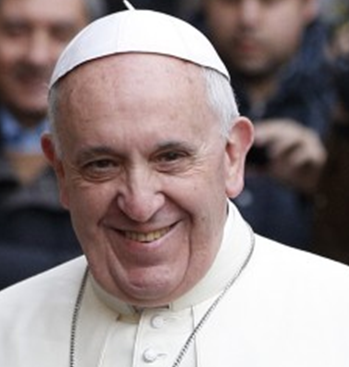
Largely these days, “emerging political systems” are democracies. Ideally, or at least in Abe Lincoln’s “Gettysburg Address,” democracy means that the people of a nation create and enjoy self-rulership. This privilege, or this right, certainly could include a people keeping control of its national resources, say oil, for its own benefit. But experience shows that if resource sovereignty were recognized, extractive companies in the Global North would lose profit opportunities.
Likely for fear of money loss, the US has promoted lawfare – especially in resource-rich Latin American nations (this means that the US, hypocritically and ironically, has opposed people’s self-rulership). Across Latin America at state oil companies, bribe offers flooded officials in charge of contract awards. These bribes were exposed, beginning in Brazil, by an investigation called Operation Car Wash.[3]
The record shows this bribery was US-sponsored – with the apparent aim to destabilize resource-rich nations with public outcry saying leaders were “corrupt,” followed by their opponents bringing lawfare in congress or court, with the whole breeding a sense of anti-politics, distrust of government.[4]
Of Operation Car Wash, NACLA wrote,
“The ever-widening scandal that has reached the highest levels of power in countries from the Andes to the Caribbean, toppling current and former presidents, and altering the region’s economic and political landscape.”[5]
Cause of Operation Car Wash
At bottom were two companies – Brazil’s Odebrecht SA and the US’s Sargeant Marine LLC. Sargeant Marine had CIA ties.[6] Investigators found evidence that Odebrecht bribed officials for state oil-development contracts in eight Latin American companies – Brazil, Argentina, Colombia, Dominican Republic, Guatemala, Mexico, Panama, and Peru – while Sargeant Marine did so in three – Brazil, in Ecuador, and in Venezuela.[7] In 1986, Odebrecht built Miami’s “Metromover.” Sargeant Marine is based near Miami and is headed by a major fixer in Florida Republican politics, Harry Sargeant III.[8]
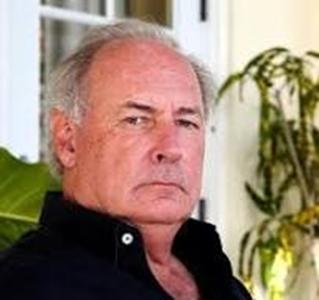
South Florida power politics nurtures anti-communist exiles from Nicaragua and Cuba.[9] In this charged milieu, anti-communism remains a powerful, respectable motive, especially when “anti-communist” action can turn large money.[10] Wresting control of oil from Latin American leftists had to have been appealing in this milieu. The CIA has influence in this circle.[11]
As such, the record suggests that wresting control of Latin American oil from leftist leaders motivated a CIA-inflected scheme that began just after a son of a CIA director became US president, in late 2000.[12] This son was George W. Bush, who soon appointed to his cabinet[13] senior CIA official Marty Martin. And soon after, Harry Sargeant III hired Marty Martin, to work for Sargeant Marine.
In 2010, after a Sargeant Marine affiliate completed shipments of asphalt to Brazil’s state oil company Petrobras, the affiliate’s executive emailed Daniel Sargeant (Harry III’s brother) stating,
“Wow, guess last Brazil trip with crooks paid off. Should go again before contract next year gets hot and heavy,” according to a plea agreement with US prosecutors.
I suspect Odebrecht was a red herring diverting attention from Sargeant Marine. For example, patriarch Marcelo Odebrecht got notably lenient treatment by US prosecutors – a fairly common occurrence when and if the CIA says full pursuit of a criminal case could threaten national security.[14]
Effects of “Car Wash” on Latin American Leftist Presidents
By 2019, the word “corruption” was synonymous with leftist Latin American presidents.[15] In Venezuela, Car Wash based impeachments of both Hugo Chavez and his successor Nicolas Maduro.[16] In Peru, Pedro Castillo is still in jail from Car Wash. In Ecuador, Rafael Correa was forced into exile by lawfare. And in Argentina, lawfare convicted Cristina Fernandez de Kirchner.[17]
Venezuela
Hugo Chavez controlled the world’s largest oil reserves. In 2003, a company co-owned by Harry Sargeant III was accused of not paying the Venezuelan state oil company PDVSA for shipments of crude oil, court records show.[18] Odebrecht as well was active in Venezuela at the time.
In 2003, the US right was deeply concerned about Chavez, a far-left democratically elected leader who advertised he would direct Venezuelan oil benefits as much as possible to non-wealthy Venezuelan people
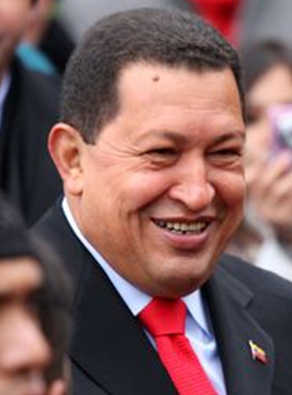
As if to prevent this social program, allegedly the scheme involving Sargeant-controlled companies, Odebrecht, and other actors eventually cheated Venezuela out of billions of dollars in oil revenue.
Five months after being elected, Chavez was dead. The record shows widespread suspicion that Chavez was assassinated (through surreptitious inoculation with an aggressive cancer) by a rightist cohort including Venezuelan elites and the CIA (both hungry to wrest away public control of Venezuelan oil).
In October 2016, Venezuela’s Congress impeached Nicolas Maduro, Chavez’s successor, for “constitutional violations.” Maduro was reelected in 2018.
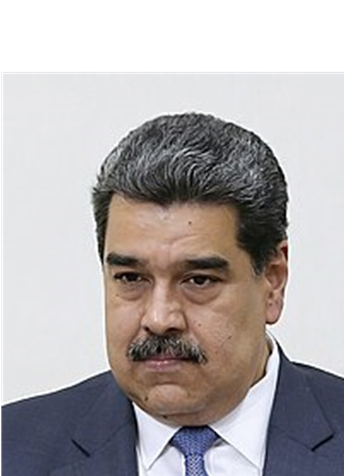
Then, opposition leader rightist Juan Guido mounted an election “fraud” investigation and hinted he might declare himself interim president until the investigation finished. He told the US Trump/Pence administration of this plan. On January 22, 2019, US vice president Mike Pence phoned Guiado and told him that the United States would support his move to “legally” oust Maduro. Within hours of Pence’s call, Guiadó declared he assumed the functions of acting president. Just days later, Trump said the US recognized Guiado as president.
As of late summer 2024, no longer fronted by Guiado, action is renewed in Venezuela against Maduro, led by María Corina Machado. For analysis, see forthcoming essay on this site, “Maduro.”
Ecuador
In 2014, Florida-based Sargeant Marine bribed officials at Ecuador’s state-owned oil company, Petroecuador, to secure a contract for supplying asphalt.[19] Bribery was exposed and lawfare ensued against Ecuador’s president Rafael Correa. Correa, elected in 2006, depicted himself as the leader of a “second independence movement” (following that against Spain) devoted to freeing Ecuador from American neocolonialism.[20]]
In a 2009 interview, Correa said,
“Many of the oil contracts are a true entrapment for the country. Of every five barrels of oil that the multinationals produce, they leave only one for the state and take four….That is absolutely unacceptable. Socialism will continue.”
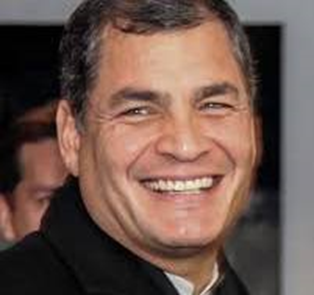
Significantly, Correa early pledged he would “keep in the ground” an oil reserve of around 1 billion barrels – one of Ecuador’s biggest — in return for money compensation from nations pledged to halt global warming.[21]
When in 2012 a political opponent of Correa’s was kidnapped, Correa was charged in the case. At end of his final presidential term, Correa moved to Belgium. In July 2018 Interpol rejected an Ecuador-issued arrest warrant and called it “obviously a political matter.”[22] However, two years later on disputed evidence derived in Operation Car Wash, in 2020 a court found that Odebrecht had managed to bribe Correa.
Peru
In Peru, led by Odebrecht the bribery scheme was aimed to empower a readily identifiable “extractivist economic elite” (evolved under dictator Alberto Fujimori) that controls petroleum, gold, and most recently copper resources.[23] Significantly, a Peru copper baron also big in construction is “regularly allied” with Odebrecht on Peru’s public-works projects. This is oligarch Dionisio Romero Paoletti, who is also a banker, controlling Banco Credito de Peru. Between 2011 and 2016, Romero Paoletti and fellow oligarchs managed what researchers have called a “capture” of the Peruvian state. [24]
Organized crime enters here, through Romero’s bank. Illegal campaign contributions funneled through Romero’s bank BCP[25] helped start a political party, Fuerza Popular, that soon would control Peru’s Congress.[26] Some contributions through Romero’s bank came from narcotraficantes, cocaine dealers and some Congressmen themselves proved involved with dealing. [27] During Peru’s local and regional elections of 2010, more than 670 candidates had criminal backgrounds.[28] No accusations name Romero himself.
In Peru in 2011, investigators found “illegal campaign financing” between Odebrecht and politicians in the Fuerza Popular party, founded by Keiko Fujimori (daughter of former dictator Alberto Fujimori) which controlled Congress.[29] Later, the US’s DEA alleged Fujimori ran for president in 2014 with $15 million laundered from drug dealer Miguel Arévalo Ramírez.
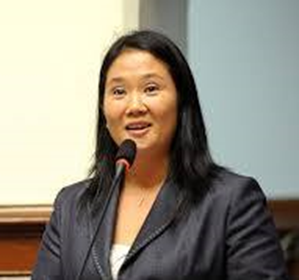
Two years later at a warehouse co-owned by Keiko’s brother Kenji, 100 kilos of pure cocaine was found by Peruvian police.[30]
Here, lawfare enters, against leftist Pedro Castillo. Castillo ran for president pledging to nationalize Peru’s copper reserves away from corporate owners like Romero’s Sierra Metals.
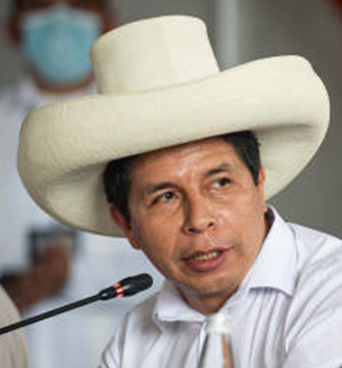
In 2021, Castillo defeated Keiko Fujimori, powerful congresswoman, for the Peruvian presidency.
In 2022, the Fujimori-controlled (and coca-tainted) Congress impeached Castillo and then arrested him[31] – in classic lawfare. A French publication called this “Peru’s Permanent Coup” (a Peruvian constitution adopted in 1993 effectively makes Congress more powerful than the president).[32]
By January 2023, just 21 percent of people in Peru were satisfied with their “democracy,” according to a Vanderbilt University survey. It is clear that Peruvians are simply anti-despotism, but the record indicates that anti-despotism – that is, a simple yearning for true self-government – is inimical to US-interest covert policy – democracy hypocrisy.
Argentina
In Argentina, an offshoot investigation from Operation Car Wash accused president Cristina Fernandez de Kirchner of unfairly awarding state public-works contracts to a family associate, and during a swirl of unfriendly media coverage, Kirchner was convicted. Afterward, Kirchner described as “flagships of lawfare” the main media outlets Clarin and La Nacion.[33]
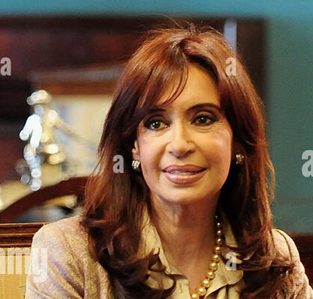
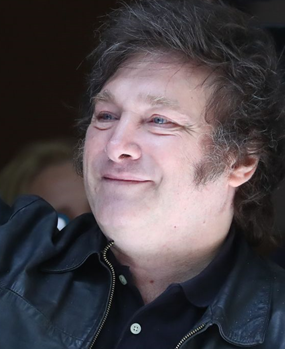
By summer 2023, Kirchner’s name was cleared,[34] but media then were writing about Javier Milei, who, that fall, won the presidency. Soon, Milei was called an authoritarian. Milei presented a sweeping “megadecree” of deregulation that, prominently, enables “privatization” of state oil company YPF.[35] Concerning Argentina’s large lithium resources, a US National Security Council official met Milei the day before his inauguration, offering “support,’’ likely for a return to full privatization of Argentina’s lithium that eliminated a share recently gained by YPF.
Here at the end of this essay I will note that the US’s National Endowment for Democracy” long has been called a second CIA. As such, “to understand hypocrisy-democracy, think ‘NED.’”
[1] Donald Trump is on record saying that lawfare is occurring in the United States, against him.
[2] The Atlantic, August 21, 2019
[3] Investigators originally pursued tips on alleged money-laundering at a “lava jato” (car-wash) business in Brasilia. For a full story on the operation’s effects in Brazil, see essay on this Site, “Brazil Car Wash.”
[4] This ploy is a standard. The record shows it was used in oil-rich Kazakhstan in 2022 to spur violent demonstrations that were publicized when Russian troops were called to Kazakhstan to stem them; see this Site’s “Kazakhstan Crisis: Insurrection, 2022.” The record suggests state officials were bribed to raise gasoline prices sharply to spur protests.
[5] North American Congress on Latin America, August 29, 2018
[7] The Boca Raton, Florida-company Sargeant Marine netted more than $38 million in profits as a result of the bribes, according to US prosecutors. Recently unsealed court filings showed that Harry III’s brother Daniel Sargeant, who once ran Sargeant Marine, pleaded guilty in December 2022 to conspiracy to commit money laundering and violate the Foreign Corrupt Practices Act, which bars Americans from paying overseas officials in exchange for business. A former PDVSA manager once in charge of asphalt sales was arrested in a related case.
[8] US DOJ, September 22, 2020. Odebrecht did construction, Sargeant Marine supplied asphalt paving on projects.
[9] Florida Phoenix, September 27, 2020. On June 2, 2010, former GOP Chairman Jim Greer wasarrested on six felony charges. Harry Sargeant III gave financial assistance, and eventually Greer allegedly took the rap for sitting Florida Gov. Charlie Crist.
[10] Latin America holds huge potential profit in its oil reserves, and this profit is coveted by US oil interests (mostly far-right politically). As such, discrediting leftist controllers of Latin American oil presents as a good way for this rightist clan to act on the motive of anticommunism-with-profit. There were means – bribe money – and opportunity, in the form of greed among mid-level officials at state-run oil companies in Latin America.
[11] And has had since before it ran Cuban expats in the foiled Bay of Pigs invasion of Cuba.
[12] At this time In Peru, where the scheme would reach, head of Peru’s spy agency and prime CIA-asset Vladimiro Montesinos was fleeing because of public outrage over his helping drug dealers in court cases and his illegal arms trading. PBS, October 2005The answer is suggested in a July 1999 U.S. State Department cable which states, “There is no one who stands toe-to-toe with Montesinos in the Peruvian government, and nothing the government does on intelligence, enforcement and security issues occurs without his blessing. Like it or not, he is the go-to guy…”
[13] As “terrorism advisor.”
[14] In numerous cases historically, such treatment reflects the CIA warning prosecutors that a case involves “national security.” The case came because US financial institutions laundered some bribe money in the scheme. In this context, note that the CIA’s job as publicly described involves “making the world safe for democracy”; in practical terms, CIA work makes resource-rich foreign nations safe for American investors.
[15] Media reported essentially that Latins didn’t want democracy – under a leftist. In Brazil, when demonstrations arose against “corruption,” the UK’s Financial Times headlined, “Brazil’s poor turn their back on Rousseff,” referring to socialist president Dilma Rousseff.
[16] And Donald Trump’s recognition of a “successor,” Juan Guiado.
[17] Financial Times, March 16, 2015. Recall again Pope Francis’s warning that media are necessary to create lawfare.
[18] Florida Phoenix, September 27, 2020. Sargeant Marine Inc. was indicted in New York on charges of bribing officials in Venezuela, Brazil, and Ecuador. In 2004, Harry Sargeant III linked with Marty Martin, the Bush appointee and CIA agent, allegedly to bribe a Jordanian official so that Sargeant Marine would win a license to move fuel to US troops in Iraq across Jordanian territory. DOJ September 22, 2020 Sargeant Marine also admitted that between approximately 2012 and 2018, it bribed four Petróleos de Venezuela, S.A. (PDVSA) officials in Venezuela in exchange for inside information, and for their assistance in steering contracts to purchase asphalt from PDVSA to a Sargeant Marine nominee.
[19] Department of Justice press release, January 28, 2021
[20] During his first year in office, Correa spoke of building an alternative to capitalist development, stating “we are building a conception of development that is different from that of the capitalist system, where we seek not to live better, to have competition, to have more every day, but to live well, to satisfy basic needs, where harmony with nature is sought, where we seek the indescribable life of cultures.”
[21] Wikipedia Rafael Correa
[22] Ibid.
[23] Francisco Durand, “Extractives Industries and Political Capture: Effects on Institutions, Equality, and the Environment,” Oxfam, June 2016
[24] A capture akin to that achieved around 1920 in Chile by the US’s Anaconda Copper and advertised proudly by US backers of Anaconda; see my essay “Chile Copper” on this Site.
[25] Finding by investigators from the Ojo Publico TV station. This illegal money flow began with $1 million in donations from Odebrecht.
[26] This was Keiko Fujimori’s Fuerza Popular, through which Fujimori, daughter of dictator Alberto Fujimori, became a seeming cinch for president.
[27] Romero’s Banco Credito del Peru has as a client Global Distribution System, a front company that laundered the money for the most powerful drug trafficker in Peru, Fernando Zevallos Gonzales, known as ‘Lunarejo’. BCP has more than 50 percent foreign shareholders. From 2009 to 2021, BCP received more than US$2.2 billion from clients investigated for organized crime. Ibid. to 26.
[28] Elected in 2011. roughly 1 in 5 of the 130 members of Peru’s single chamber Congress has been caught up in scandals including running brothels with underage sex workers, unpermitted gold mining, and operating a cable TV company that sold pirated stations.
[29] German Institute for Global and Area Studies 2018 in the party’s eight years of existence, three Fuerza Popular general secretaries were investigated for receiving illegal party funding and money laundering for drug trafficking.
[30] Despite this, Kenji was elected to Congress in 2016.
[31] Castillo had responded to impeachment by decreeing a dissolution of Congress. This turned out to be unenforceable, but it elicited hue and cry in the US about an “attack on democracy” by the leftist Castillo.
[32] Castillo argued that the legislative body served oligopolic businesses and that it had allied itself with the Constitutional Court to destroy the executive branch in an effort to create a “dictatorship of Congress”. In December 2017, this Congress had impeached president Pedro Pablo Kuczynski, citing allegations Odebrecht had bribed Kuczynski, an example of lawfare enabled by Operation Car Wash. Kuczynski resigned.
[33] Note here that Pope Francis has said lawfare that discredits democracy eases the path for authoritarianism; address to the World Congress of the Association of Penal Law, November15, 2019. Plato appears to have held the same; in “Republic,” democracy is called vulnerable to faction, and faction is vulnerable to despotism (lawfare’s chief effect is faction).
[34] In June 2023, a closely related case was dismissed involving allegations of Kirchner misconduct regarding her husband’s associate, Lazaro Baez.
[35] El Pais, December 21, 2023.